

What Needham’s Historic District Debate Means for Antique Home Buyers and Sellers
What does a local historic district designation mean if you are buying, selling, or owning an antique home in Needham, MA?
A local historic district in Needham gives the town’s Historic District Commission binding authority over exterior changes visible from the street, which affects renovation plans, pricing, and marketing for every antique home inside that designation.
Why This Matters Right Now in Needham
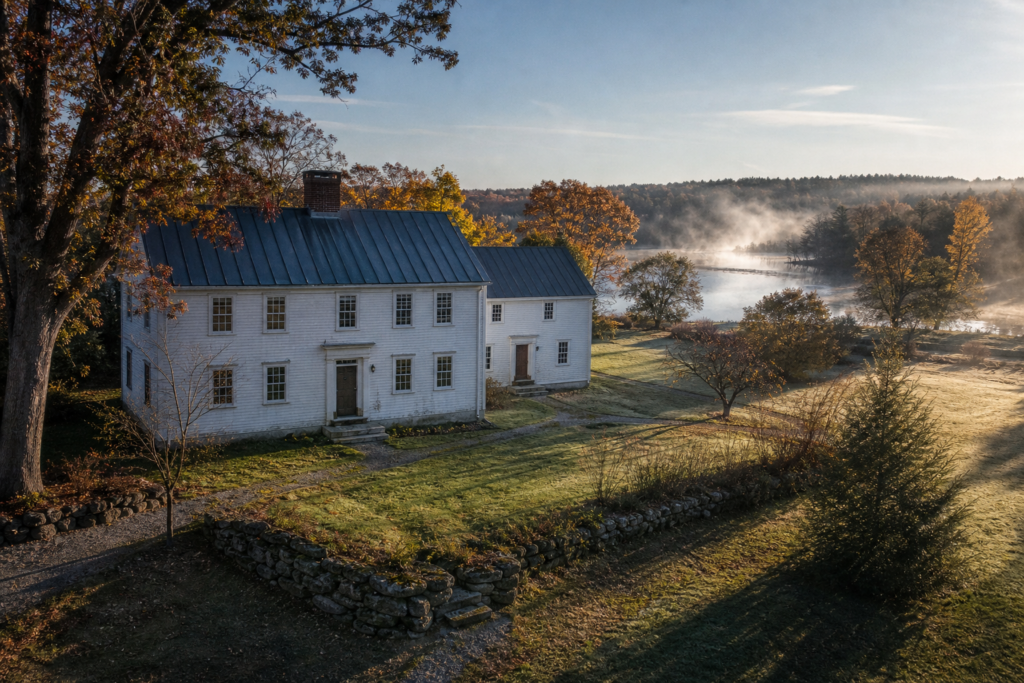
The property at 178 South St. is poised to become Needham’s second single-home local historic district. The article appeared on the October 2026 Special Town Meeting warrant as Article 10, according to the Needham Observer. This follows the establishment of Needham’s first single-parcel district at the Jonathan Kingsbury House, 3 Rosemary St., in May 2024.
Most people who move to Needham come for the schools and the commute. What surprises many of my clients is just how many 18th- and 19th-century homes are still standing here. The South Street corridor alone has roughly 10 surviving five-bay colonial homes, according to the Needham History Center’s executive director. Most of the others have already been demolished.
So why should you care? Because the outcome of this debate shapes what kind of community Needham becomes, and if you own, want to buy, or plan to sell an antique home in town, the implications are direct and practical.
What a Local Historic District Actually Does in Needham
Let me clear up one of the biggest misconceptions I encounter. A local historic district is not the same thing as a plaque on the wall or a listing on the National Register.
Under Massachusetts General Laws Chapter 40C, a local historic district gives the municipality’s Historic District Commission the authority to review and approve, or deny, exterior changes to a designated property that are visible from a public way. This is binding legal protection. By contrast, a National Register listing is essentially honorary and provides no practical protection from demolition, according to Needham’s own district report.
What does that mean in plain terms for you?
- Windows, siding, roofing, and additions can all require commission review before work begins
- Paint color may also fall under commission review, depending on the specific bylaw
- Interior renovations are not regulated, so you can modernize kitchens, bathrooms, and mechanical systems freely
The Jonathan Kingsbury House at 3 Rosemary St. is a perfect example. That 1700s-era home has preserved its historic exterior while incorporating solar panels and an EV charger. Modern amenities are not prohibited. You just need to understand what the commission controls before you plan your project, not after.
Why 178 South St. Became the Test Case
The story of 178 South St. illustrates exactly why this tool exists. The property, described by the Needham History Center director as “the most significant historic house in Needham” and the third-oldest structure in town, sits on a 1.25-acre parcel with dramatic river frontage. Its five-bay colonial front dates to the early 19th century, and a surviving rear ell dates to approximately 1730.
When the property came on the market after the death of its longtime owner, at least one prospective buyer proposed demolishing the home and building a 17,000-square-foot replacement. The threat of demolition is what drove the owner’s foundation to pursue historic district designation as the only guaranteed preservation mechanism, according to reporting in the Needham Observer.
There is also a cultural dimension here that matters. The famed illustrator N.C. Wyeth was born in the house next door to 178 South St. His grandfather, horticulturist Denys Zirngiebel, developed the Giant Swiss Pansy at the property. Wyeth’s 1913 painting “Christmas Morning” depicts the front of 178 South St. That is the kind of history that, once demolished, is simply gone.
How Needham’s Single-Parcel Model Works for Homeowners
What makes Needham’s approach distinctive is its single-parcel framework. Rather than designating an entire neighborhood or streetscape, the town allows individual properties to be protected one at a time.
Here is what you need to know about the process. Single-parcel local historic districts in Needham are owner-initiated. Nobody can force this designation on your property without your involvement. The process requires:
A preliminary study of the property’s historical significance
Acknowledgment from the Massachusetts Historical Commission
A 60-day comment window for the Select Board and Planning Board
A public hearing
A two-thirds vote at Town Meeting
When one house gets this protection, it is almost always because the owner wanted it. In my experience, that tells you something meaningful about how attached people become to these homes and the responsibility they feel toward preserving them.
With 26 years of experience in Needham real estate and over 180 closed transactions, I can tell you that the people drawn to antique homes are a small but deeply committed group. They know exactly what they are looking for, and they will accept quirks that a typical buyer simply will not tolerate. Understanding this buyer psychology is essential whether you are buying or selling.
Buying an Antique Home in Needham: What You Need to Ask First
If you are considering an antique home in Needham, the most important thing I can tell you is this: ask what is protected before you fall in love.
Request the District Bylaw Before You Plan Renovations
If a property sits within a local historic district, request the specific bylaw and the Historic District Commission’s design guidelines before you write an offer, not after you have already started dreaming about a new addition. The specifics vary between districts, and knowing the rules up front will save you from an expensive surprise.
Hire an Inspector Who Knows Antique Homes
Inspections matter even more with old houses. Original sills, old wiring (including knob-and-tube), and fieldstone foundations are common in Needham’s pre-1900 homes. I always recommend finding an inspector who specializes in antique construction, not just a general home inspector. The issues in a 1730 structure are categorically different from those in a 1990 colonial.
Understand Massachusetts Lead Paint Requirements
Massachusetts has some of the strictest lead paint laws in the country. Any home built before 1978 must be disclosed as potentially containing lead paint. For homes where a child under six will reside, the property generally must be deleaded or have a Letter of Interim Control in place, according to Massachusetts law. If you have young children or plan to start a family, factor deleading costs and timelines into your offer and due diligence well before closing.
Embrace the Comparables Problem
Here is the reality that many buyers do not anticipate: antique homes in Needham, particularly pre-1900 colonials, have very few true comparables in any given market window. Automated valuation tools often miss the mark on these properties because they cannot account for original wide-plank floors, hand-hewn beams, or period millwork. At the same time, deferred maintenance items common to old houses can offset that character premium.
What does that mean for you as a buyer? You need a Needham Realtor who can build a pricing case from first principles, not someone who relies on a quick comp pull. This is where deep local expertise makes the difference.
Selling an Antique Home in Needham: Making History Your Greatest Asset
If you own an antique home in Needham and you are considering a sale, I want you to think about your home’s story differently than you might expect.
Lead with the Story, Not Just the Square Footage
For sellers of antique homes, the history of the house, past owners, and original details should be front and center in the marketing, not an afterthought. Preservation-minded buyers, the ones most likely to pay a premium for your home, are responding to character and narrative. They want to know the lineage.
Consider the James Smith House at 706 Great Plain Avenue, which is listed among Needham’s historically significant structures in official district reports. Properties with documented histories attract a specific buyer pool that values irreplaceable elements over updated finishes.
Price with Care and Patience
I spend more time on pricing antique homes than almost anything else in my practice. With fewer comparables and widely variable condition, the standard approach does not work. Rated 5 out of 5 stars by 130 past clients, I bring a level of local pricing knowledge that matters most in exactly these situations, where the pricing judgment is difficult and the buyer pool is specialized.
Character elements add value that standard models miss. But fieldstone foundations, original single-pane windows, and aging mechanical systems can offset it. A thoughtful pricing strategy accounts for both sides honestly.
Consider Whether Historic Designation Helps Your Sale
If your home has genuine historic significance and you are worried about a teardown buyer, the single-parcel historic district process gives you a tool. It is owner-initiated, and it can actually attract the right kind of buyer, someone who values preservation and is willing to invest accordingly.
The Bigger Picture: What Kind of Place Does Needham Want to Be?
Every old house that comes down changes the street. With ongoing teardown pressure in Needham, the debate over historic districts is really about the character of the town itself.
The South Street corridor tells that story clearly. Where the surviving five-bay colonials once stood alongside many others on the streetscape, each demolition makes the survivors rarer and, for the buyers who want them, harder to find. But rarity only matters if the homes survive long enough for those buyers to find them.
As someone named a 2026 Top Agent for Needham by Fast Expert and recognized as a Top 1.5% America’s Best Realtor by Real Trends, I watch this tension play out regularly. Needham is a competitive MetroWest Boston real estate market with strong demand and limited inventory. The pressure to tear down and build new is real. But so is the commitment of residents who see Needham’s colonial heritage as something worth protecting.
If you are buying an antique home here, you are part of that conversation whether you realize it or not. And if you are selling one, the way you position your property can shape which side of the conversation your buyer falls on.
Frequently Asked Questions About Needham’s Historic Homes
What is the difference between a local historic district and a National Register listing in Needham?
A local historic district under Massachusetts General Laws Chapter 40C gives the town’s Historic District Commission binding authority to review and approve exterior changes visible from a public way. A National Register listing is essentially honorary and provides no practical protection from demolition, as Needham’s own district report states. If you want real protection for your property’s exterior, a local historic district is the tool that has legal teeth.
Can I renovate the interior of a home in a Needham historic district?
Yes. Interior changes are not regulated under a local historic district designation. You can modernize kitchens, bathrooms, electrical systems, and anything else inside the home without commission review. The Jonathan Kingsbury House at 3 Rosemary St., Needham’s first single-parcel district, has solar panels and an EV charger, showing that modern living and historic preservation coexist.
Who initiates a single-parcel local historic district in Needham?
Single-parcel local historic districts in Needham are owner-initiated. Nobody can force this designation on your property. The process requires a preliminary study, Massachusetts Historical Commission acknowledgment, a 60-day comment period, a public hearing, and a two-thirds vote at Town Meeting.
How does a historic district designation affect my property value in Needham?
The impact varies. For preservation-minded buyers, designation can be an asset because it signals that character elements are permanently protected. For buyers who wanted flexibility to make major exterior changes, it may narrow the appeal. In my experience, antique homes attract a small but devoted buyer pool that values exactly what the designation preserves.
What exterior changes require Historic District Commission review in Needham?
Generally, windows, siding, roofing, additions, and in some cases paint color may require review if visible from a public way. You should request the specific district bylaw and design guidelines for your property to understand the exact scope before beginning any project.
Why was 178 South St. proposed as a historic district?
The property, described as the most significant historic house in Needham and the third-oldest structure in town, faced the prospect of demolition when at least one buyer proposed replacing it with a 17,000-square-foot home. The owner’s foundation pursued historic district designation as the only guaranteed way to prevent demolition, according to reporting in the Needham Observer.
What should I know about lead paint when buying an older home in Needham?
Massachusetts has strict lead paint laws. Homes built before 1978 must be disclosed as potentially containing lead paint. When a child under six will reside in the home, the property generally must be deleaded or have a Letter of Interim Control in place under Massachusetts law. Buyers with young children should factor costs and timelines into their plans and confirm current requirements with qualified professionals.
How do I find the right inspector for an antique home in Needham?
I always recommend finding an inspector who specializes in antique construction, not a general home inspector. Original sills, fieldstone foundations, and knob-and-tube wiring require specific knowledge. Ask candidates directly about their experience with pre-1900 homes before hiring.
Are antique homes harder to price than newer homes in Needham?
Yes. Antique homes in Needham have very few true comparables in any given market window. Character elements like wide-plank floors and hand-hewn beams add value that automated models miss, while deferred maintenance on aging systems can offset it. Accurate pricing requires a Needham Realtor who can build the case from first principles.
Should I highlight my home’s history when selling in Needham?
Absolutely. The history of the house, past owners, and original architectural details should be central to your marketing strategy. Preservation-minded buyers respond to the story and the character, not just the square footage. In a town where each demolition makes surviving antique homes rarer, your home’s narrative is a genuine competitive advantage.
The Bottom Line
Needham’s historic district conversation is not abstract. It is about specific houses on specific streets, and it directly affects how you buy, sell, or renovate an antique home in this town. Whether you are drawn to the wide-plank floors of a colonial on South Street or you are preparing to sell a home with two centuries of history, understanding what a local historic district does, and does not, control is essential to making a sound decision.
With 26 years of experience in Needham real estate and a deep personal connection to this community, I help clients navigate exactly these complexities. If you are considering buying or selling an antique home in Needham or anywhere in MetroWest Boston, I would welcome the chance to talk through what the designation means for your specific situation. Reach me at (781) 223-5641 or visit Migdol Real Estate LLC at 936 Great Plain Avenue in Needham. The best real estate decisions start with the right information, and I am here to make sure you have it.

Jane & Jonathan Migdol · Gibson Sotheby's International Realty
Global Real Estate Advisors — MetroWest Boston
Get in touch →